
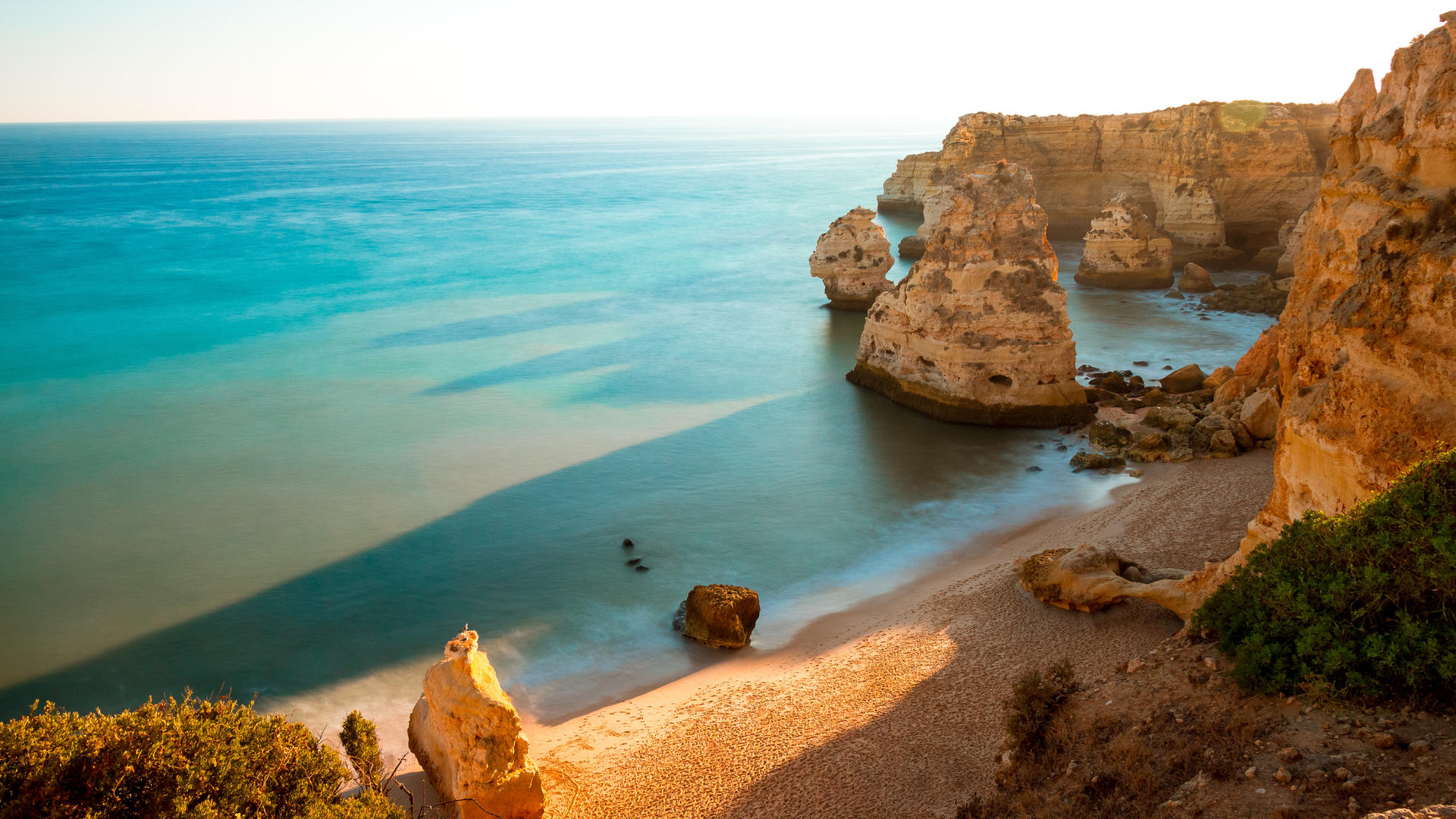
The best time to visit Portugal is from May to October, when the weather is reliably warm, sunny and dry. During these months, you can expect long sunny days and very little rainfall, with warm temperatures that are perfect for beach days and sightseeing, especially in the popular Algarve region. This long stretch of pleasant weather makes Portugal a fantastic choice for much of the year, though you'll find the peak summer months of July and August are the busiest.
Portugal in spring: 12-18°C, mild and brightening
Spring sees Portugal burst into life with pleasant, mild weather and blooming landscapes. With average daily temperatures climbing and rainfall decreasing after winter, it's a wonderful time for city breaks in Lisbon or Porto and for enjoying outdoor activities like walking and hiking before the summer heat arrives.
Portugal in summer: 17-25°C, hot and sunny
Summer is peak season, delivering hot, dry and sunny conditions across the country. July is the warmest and driest month, with average highs hitting 26°C and barely any rain. It's the ideal time for a classic beach holiday, especially in the south, though be prepared for bigger crowds.
Portugal in autumn: 15-21°C, warm with increasing rain
Early autumn continues the summer feeling, with September still offering warm temperatures and plenty of sunshine. As the season progresses into October and November, the weather becomes cooler and wetter, particularly in the north. It's a great time for exploring cities once the main summer crowds have departed.
Portugal in winter: 10-15°C, mild and wet
Winters in Portugal are mild compared to much of Europe, but they're also the wettest time of year. December is the month with the most rainfall, while January is the coolest. You can still find sunshine, especially in the Algarve, making it a good choice for a quiet, off-season escape.
Average weather in Portugal by month
Portugal's weather is at its warmest in July and coolest in January, while December is typically the wettest month of the year. The figures below are an average across the country, so you may find local variations - for example, the Algarve is often warmer than Porto and Northern Portugal.
| Month | Temp (C) | Rainfall (mm/month) | Sunshine (avg hrs/day) |
|---|---|---|---|
| January | 9-14°C | 97mm | 6.0 |
| February | 9-15°C | 87mm | 6.4 |
| March | 10-16°C | 90mm | 6.6 |
| April | 12-18°C | 78mm | 6.5 |
| May | 14-21°C | 52mm | 8.1 |
| June | 16-23°C | 27mm | 8.7 |
| July | 18-26°C | 7mm | 10.0 |
| August | 18-26°C | 7mm | 10.3 |
| September | 18-25°C | 40mm | 8.9 |
| October | 16-22°C | 117mm | 7.4 |
| November | 12-17°C | 115mm | 6.2 |
| December | 11-15°C | 125mm | 6.1 |
Best time to visit Portugal for beaches and swimming
For a beach holiday, the best time to visit is from June to September. During these months, you'll have hot weather, minimal rain, and over nine hours of sunshine a day on average. July and August are the hottest, with average highs of 26°C, making them perfect for sunbathing and swimming in the sea.
Best time to visit Portugal for sightseeing and city breaks
The shoulder seasons of spring and autumn are ideal for sightseeing in cities like Lisbon and Porto. May, June, and September offer the perfect balance of warm, sunny weather without the intense heat of mid-summer. You’ll find it much more comfortable for walking around historical sites and exploring city streets.
Best time to visit Portugal for hiking and outdoor activities
If you're planning on hiking or enjoying the countryside, aim for spring in April and May or early autumn in September and October. The weather is pleasantly warm but not too hot for long walks, and the landscapes are at their most beautiful. Summer can be too hot for strenuous activity, while winter can be too wet.


