
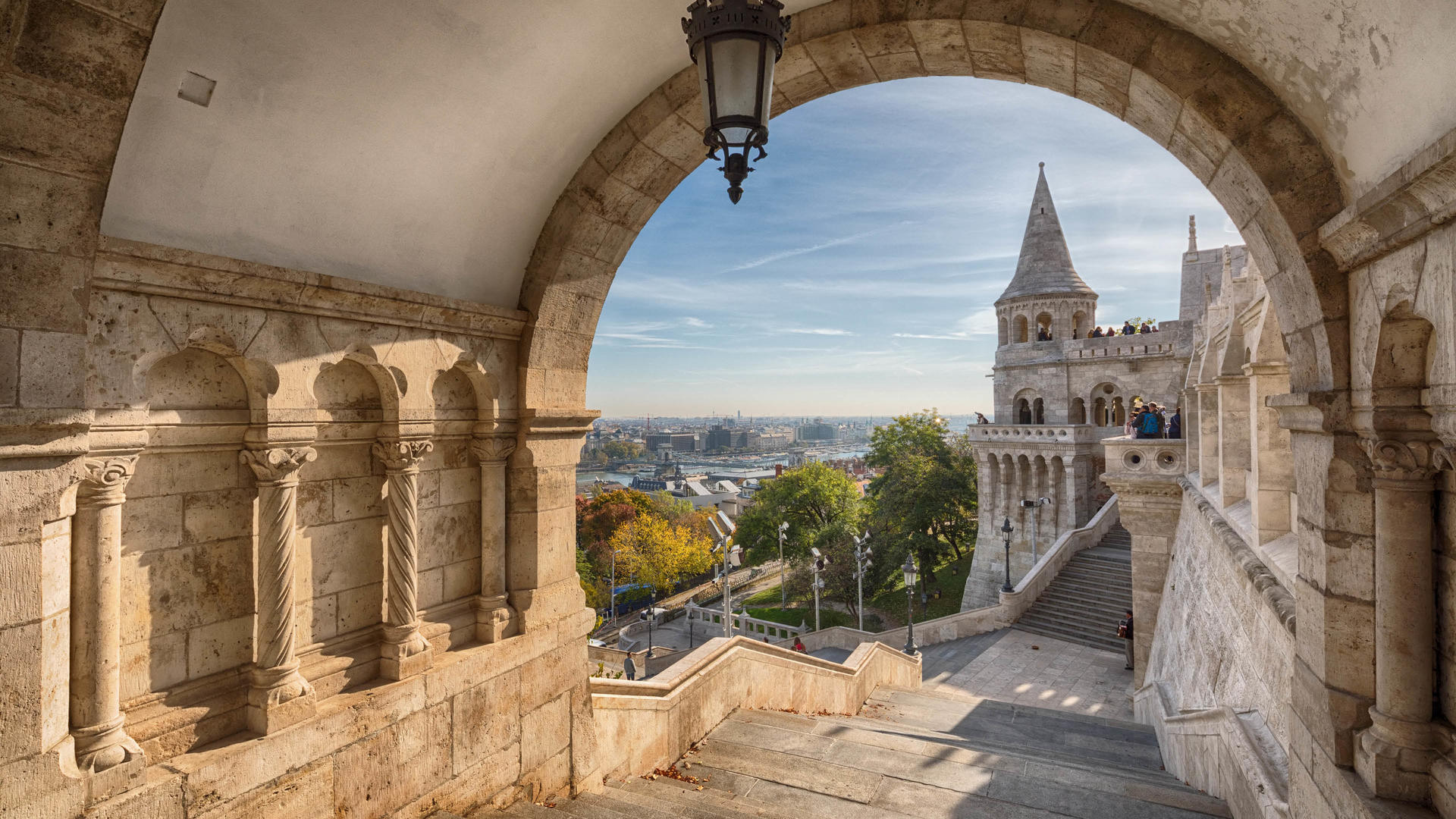
The best time to visit Hungary is from August to September, when you'll find warm days, plenty of sunshine and lower rainfall. With average highs reaching 29°C and nearly 9 hours of sunshine a day, this late summer and early autumn window is perfect for sightseeing and enjoying the last of the season's warmth in cities like Budapest.
Hungary in spring: 7-16°C, mild days perfect for city exploration
Spring sees Hungary emerge from the cold of winter, with temperatures climbing steadily from March onwards. While May can be the wettest month of the year with around 76mm of rain, April is drier and offers comfortable conditions for walking tours and sightseeing, with average highs of 17°C.
Hungary in summer: 17-28°C, hot, sunny and lively
Summer is peak season in Hungary, bringing the warmest weather of the year. July is the hottest month, with highs averaging a balmy 29°C, and August is the sunniest, with almost 9 hours of sunshine per day. It's the perfect time for river cruises on the Danube and enjoying the city's many outdoor cafes and parks.
Hungary in autumn: 9-17°C, mild and colourful with fewer crowds
Autumn is a wonderful time to visit, especially in September when the summer heat lingers with highs of 23°C and plenty of sunshine. As the season progresses into October and November, temperatures cool down, but the city's parks and hills are decorated with beautiful autumn colours. It's a great shoulder season for a quieter city break.
Hungary in winter: -1-4°C, cold, crisp and festive
Winter in Hungary is cold, with temperatures often hovering around freezing. January is the chilliest month, with average highs of just 3°C and a good chance of snow. The crisp, frosty weather creates a magical atmosphere, especially around Christmas when festive markets light up the city squares. It's also the ideal time to warm up in one of Budapest's famous thermal baths.
Average weather in Hungary by month
The weather in Hungary is warmest in July and August and coldest in January. May is typically the month with the most rainfall, while March is the driest. The figures below are an average for the country, so you may find some local variations.
| Month | Temp (°C) | Rainfall (mm/month) | Sunshine (avg hrs/day) |
|---|---|---|---|
| January | -2-3°C | 38mm | 4.2 |
| February | -1-6°C | 43mm | 4.2 |
| March | 3-11°C | 36mm | 5.9 |
| April | 7-17°C | 38mm | 6.3 |
| May | 11-21°C | 76mm | 6.3 |
| June | 16-26°C | 69mm | 7.4 |
| July | 18-29°C | 63mm | 8.3 |
| August | 18-29°C | 56mm | 8.9 |
| September | 14-23°C | 68mm | 7.7 |
| October | 9-17°C | 57mm | 6.9 |
| November | 4-10°C | 52mm | 5.7 |
| December | 0-4°C | 49mm | 4.7 |
Best time to visit Hungary for sightseeing
For sightseeing and city exploration, the best times to visit are in spring and autumn. April, September and October offer mild temperatures and fewer crowds than the summer peak. In September, you can expect highs of 23°C and over 7 hours of daily sunshine, creating perfect conditions for walking around Budapest's historic streets.
Best time to visit Hungary for thermal baths
You can enjoy Hungary's famous thermal baths at any time of year, but they offer a special kind of magic in winter. Between December and February, soaking in the naturally hot, mineral-rich waters while the air is cold and crisp is an activity you're sure to remember. With average temperatures between -1°C and 4°C, it's the perfect way to stay warm.
Best time to visit Hungary for summer sun
For the hottest and sunniest weather, plan your trip for July or August. These months see average high temperatures of 29°C and receive the most sunshine, with August enjoying nearly 9 hours a day. It's the ideal time for enjoying outdoor activities, from relaxing in city parks to taking a boat trip on the Danube.
