
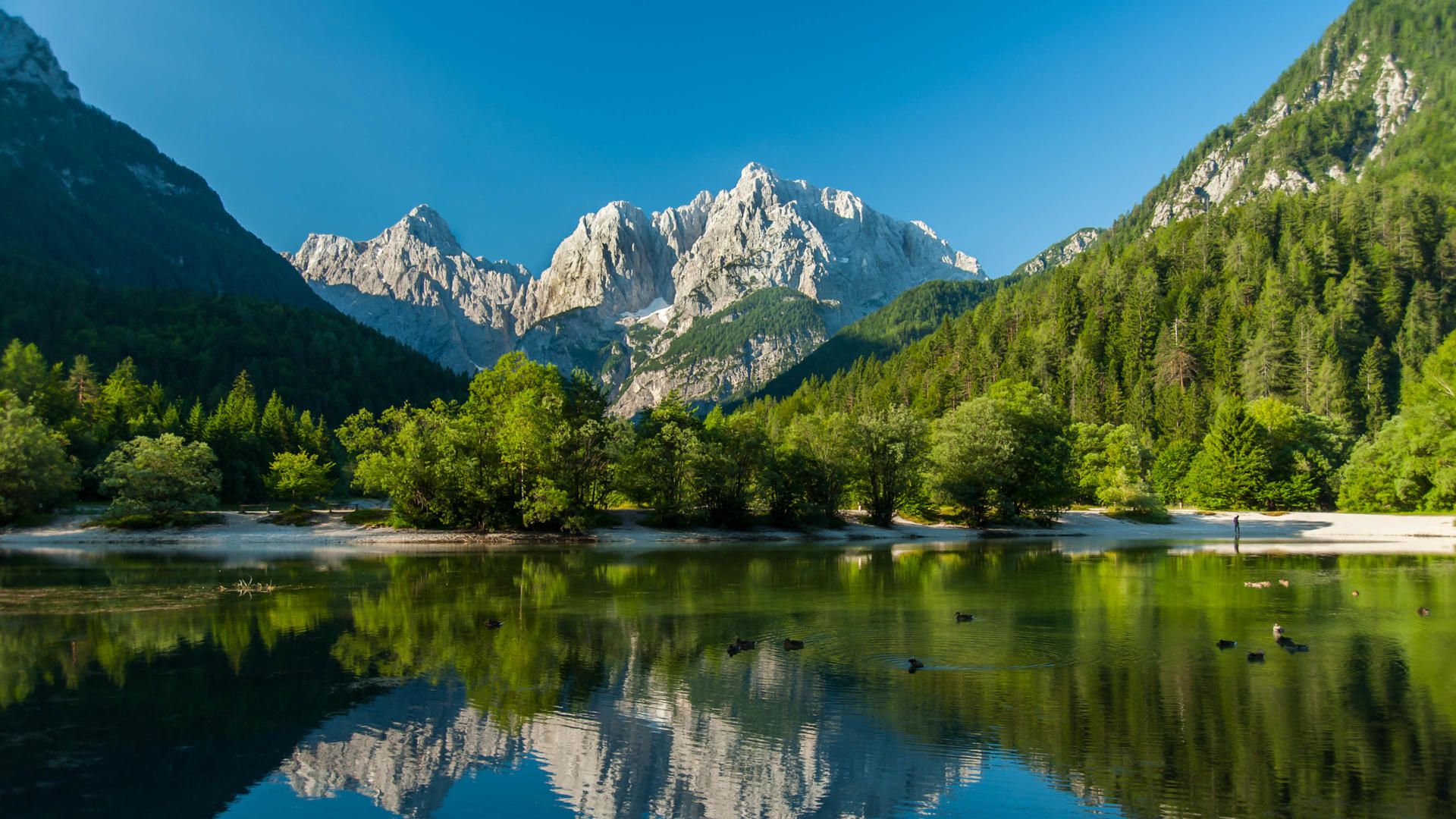
The best time to visit Slovenia is during the summer months of June, July and August. This is when you'll find the warmest temperatures and most sunshine for exploring the country's lakes, mountains and cities. While it's peak season for Slovenia holidays, the great weather makes it the ideal time for outdoor adventures.
Slovenia in spring: a fresh and awakening season
Spring sees Slovenia emerge from the cold, with temperatures gradually climbing from a chilly 2°C to a mild 11°C on average. While March can still see snow, April and May bring blooming landscapes. It can be quite wet, especially in May which is the rainiest month of the year, so be sure to pack a waterproof jacket alongside your layers.
Slovenia in summer: warm days and long sunny spells
Summer is the most popular time to visit, with some of the best weather of the year. Average temperatures sit between a pleasant 11°C and 21°C, with July being the warmest month with highs of 22°C. You'll get plenty of sunshine - peaking at over 7 hours a day in August - making it ideal for swimming in Lake Bled or hiking in the Julian Alps.
Slovenia in autumn: mild weather and colourful landscapes
Autumn brings a beautiful change of scenery as the forests turn golden-red. September is still very pleasant with average highs of 17°C, perfect for city breaks in Ljubljana. Temperatures drop through October and November, and rainfall increases, with the possibility of early snow towards the end of the season.
Slovenia in winter: crisp, cold and snowy
Winter in Slovenia is cold and often snowy, especially in the mountains. Average temperatures hover between -5°C and 1°C, with January being the coldest month. It's also the driest time of year. The crisp air and frequent snowfall create a classic winter setting, perfect for skiing and enjoying festive markets.
Average weather in Slovenia by month
July is typically the warmest month in Slovenia, while January is the coolest and driest. The weather can vary across the country; the data below is an average of regions including Ljubljana, Bled and Bohinj. You'll generally find that areas like Celje are slightly warmer, while the Alpine region around Bled is cooler.
| Month | Temp (°C) | Rainfall (mm/month) | Sunshine (avg hrs/day) |
|---|---|---|---|
| January | -6-0°C | 79mm | 4.9 |
| February | -6-2°C | 104mm | 4.3 |
| March | -2-6°C | 89mm | 5.4 |
| April | 2-11°C | 111mm | 5.3 |
| May | 6-15°C | 178mm | 5.1 |
| June | 10-20°C | 157mm | 6.4 |
| July | 12-22°C | 157mm | 7.0 |
| August | 12-22°C | 172mm | 7.6 |
| September | 8-17°C | 170mm | 6.5 |
| October | 4-12°C | 132mm | 6.0 |
| November | 0-6°C | 165mm | 4.8 |
| December | -4-2°C | 115mm | 5.4 |
Best time to visit Slovenia for hiking and outdoor adventures
For hiking in the mountains and enjoying Slovenia's famous lakes, the summer months from June to August are hard to beat. The weather is warm with average highs around 22°C, the trails are generally clear of snow, and long, sunny days with up to 7.6 hours of sunshine give you plenty of time to explore.
Best time to visit Slovenia for city breaks and sightseeing
The shoulder seasons of spring and autumn are ideal for exploring cities like Ljubljana. From April to May and September to October, you'll find pleasant, mild temperatures that are perfect for walking around, and the crowds are smaller than in peak summer. September is particularly lovely, with warm days and a hint of autumn colour.
Best time to visit Slovenia for winter sports
If you're looking for snow, plan your trip between December and February. During these months, temperatures are consistently below freezing, and there are notable snow days, providing great conditions for skiing and other winter activities in the country's mountain resorts. The festive atmosphere in the cities is an added bonus in December.
Slovenia's climate offers something for everyone, from snowy winter breaks to warm summer stays by the lakes. Packing layers is always a good idea, as temperatures can vary between the mountains and the cities.
